
Thanks to Keno Verseck and DP News for the Headline
The article was originally written in German and translated for the publication online. This probably explains why it was written as a list and a very abrupt question. How do Eastern Europe Countries commemorate the Roma Holocaust?
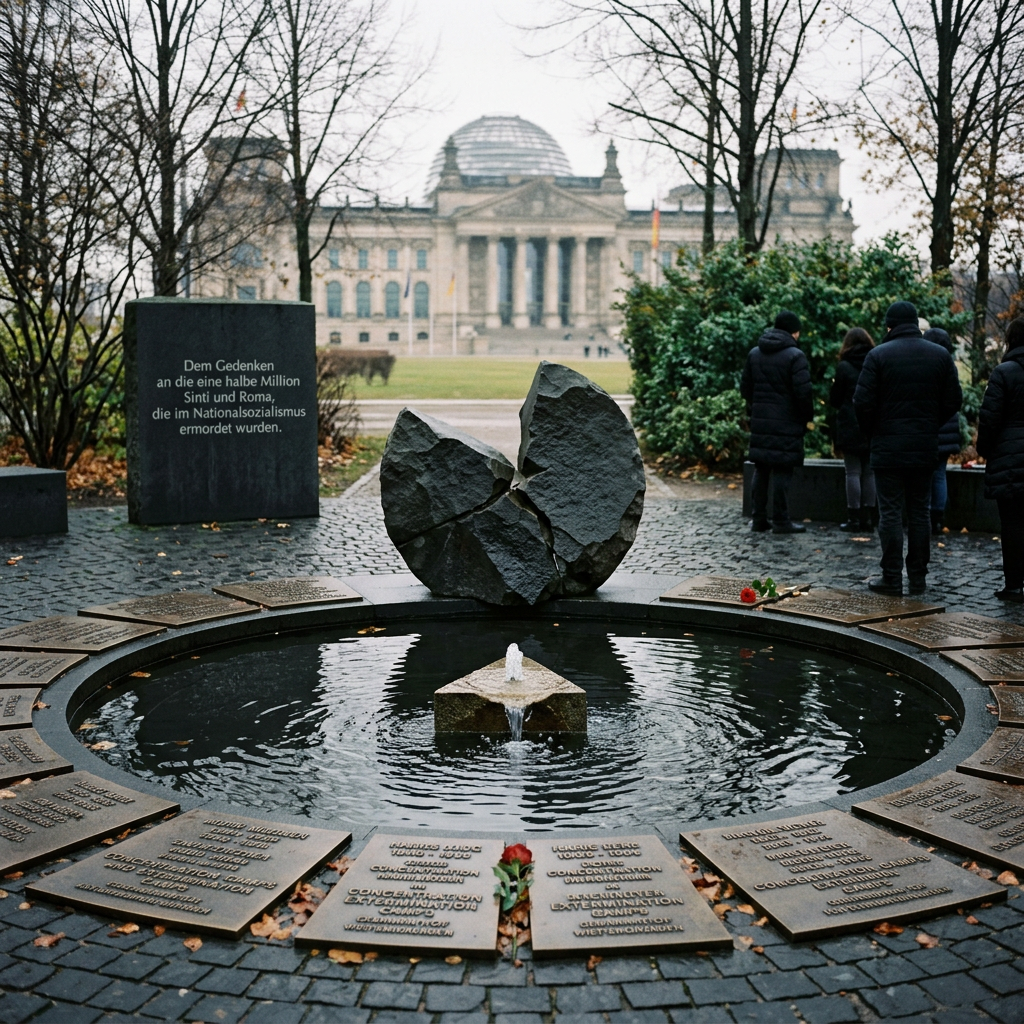
In Germany itself, the EU designated day of the second of August each year , decided on in 2015 is marked by memorial services, educational activities and public addresses. As you can imagine the holocaust of European Roma and Sinti took place was over 80 years ago before these memorials were put in place. They estimate over 500,000 Roma and Sinti were systematically rounded up and killed. We could just as easily ask why the delay in recognising these crimes against an Ethnic Group ?
Still it’s a good article and takes the form of a list which I summarise.
Poland: ( current Roma population 50,000) has been observing August the second since 2011. Including visits by parliamentary and government representatives to the Auschwitz Memorial. In addition on July the third at the village of Szczurowa, east of Krakow the memory of Polish Roma massacared by German Troops in 1943 is honoured. In 1956 Szczurowa became the first site of a European memorial for victims of the Romani Holocaust. Other small towns and villages across southeastern Poland also commemorate the killing of Polish Roma during the Nazi German Occupation.
Czech Republic: ( current Roma population 250,000) . The most recognised memorial which Roma organisations have been commemorating for decades is a Lety , south of Prague. This is the site where German Nazis established a concentration camp in 1940 and began deporting and imprisoning Romani families from occupied Bohemia from 1942 onwards. However August the second is now officially recognised by officialdom as a Day of Remembrance for Romani who lost their lives in the Holocaust.
Slovakia :(current Roma population 500,000). Romani Holocaust Memorial Day has been observed on August the second since 2005.
Hungary: ( current Roma population 600,000). Since a Parliamentary Resolution in 2005 various sites have been observing the Romani Holocaust Memorial Day on August the second. Hungarian Roma were the target of deportation and killings particularly following the German occupation in 1944 and under the rule of the Arrow Cross, Hungary’s fascist regime.More recently the memorial includes those Roma people who were killed between 2008 and 2009 by four Hungarian neo-Nazis, killing a total of six people and injuring fifty-five others. Sad to say they planned their final hate crime for the night of August the second in the Eastern Village of Kisleta.
Romania ( current Roma population 2 million). Roma Holocaust Memorial Day has officially been observed since 2020.In 2025 President Nicusor Dan became the first Romanian head of state to personally attend the memorial service at the Holocaust Memorial in Bucharest.
Bulgaria:(current Roma population 700,000) Although Bulgaria was allied with Nazi Germany during the War , they resisted German demands to deport Jews and Roma, but there was discrimination within Bulgaria and these groups were subject to being treated as second class citizens. August the second has yet to be declared an official day of remembrance but it is still marked with commemorative events organised by Roma organisations and in some instances supported by the Government.
Croatia: (current Roma population 25,000) In 2014 Parliament declared August the second a day of Remembrance . The main commemorative ceremony is held at the site of the former concentration and extermination camp Jasenovac where the fascist Ustashe movement imprisoned Serbs, Jews, Croats and Roma. Jasenovac also commemorates the attempt at escape by those imprisoned on the twenty second of April 1945.
North Macedonia: ( current Roma population 100,000). Since 2017 the second of August has been officially observed at a ceremony held in Skopje at the Holocaust Memorial Centre for the Jews of Macedonia, however as it is also a National Holiday , Republic Day and St Elijah’s Day respectively. So the Public Remembrance of the Roma Holocaust tends to receive less attention.
Serbia: (current Roma population 130,000) There is no official memorial day for the Roma Holocaust. There are other days set aside for remembering the genocidal policies of the Nazis and the Ustase regimes which also honor the memory of the Roma killed in the genocide.
Namaste and Thank You for Reading.🙏

